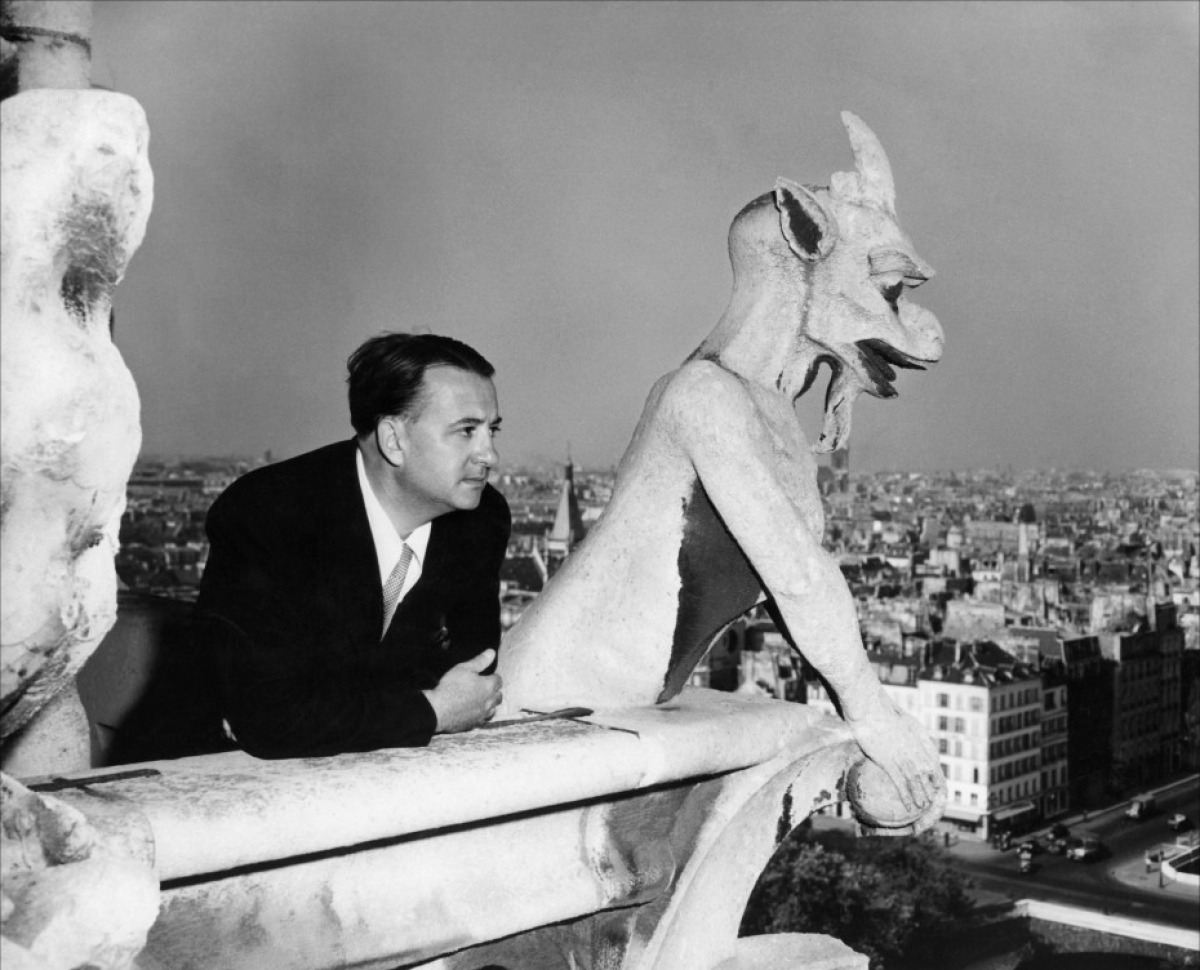
The French-born director did much to cement the image of mid-century American horror in the minds of film fans across the world.
You may know the films by heart, yet the director’s name doesn’t always spring immediately to mind. Jacques Tourneur rarely appears in lists of the most celebrated filmmakers of all time, but his influence on American cinema — particularly horror — is profound. While producer Val Lewton is rightly praised for establishing the atmospheric template of films such as Cat People (1942) and I Walked with a Zombie (1943), Tourneur was far more than a hired hand. Through his lens, horror was elevated beyond cheap shocks and into the realm of visual poetry.
A Transatlantic Beginning
Jacques Tourneur was born in Paris in 1904, the son of French actor and director Maurice Tourneur. When Maurice crossed the Atlantic to work in the expanding American film industry, ten-year-old Jacques went with him. Maurice admired Hollywood deeply, once calling Mary Pickford “the finest screen actress in the world,” and he played a notable role in the development of feature filmmaking during the silent era.
Convinced that cinema’s future lay in the United States, Maurice became an American citizen in 1921. Jacques began learning the trade from the ground up, working as an extra and later as a script clerk. But just as Maurice’s American dream seemed secure, his career unravelled. After separating from Jacques’s mother, Fernande Petit, Maurice was removed from his final U.S. production, The Mysterious Island (1928). Whatever the circumstances, it marked the end of his Hollywood chapter.
Father and son returned to Europe, with Maurice continuing to direct in France and Germany. Jacques, however, remained shaped by his formative years in America.
Return to Hollywood and a Crucial Meeting
The relationship between father and son fractured permanently when Jacques formed a relationship with his father’s former lover, Marguerite Christiane Virideau — later famous for dubbing Snow White in France in 1937. Jacques and Marguerite married in 1934 and soon returned to the United States, hoping to establish a new life.
Based on his experience as an assistant director, Tourneur secured a contract with MGM. It was while working as second-unit director on A Tale of Two Cities that he first encountered Val Lewton. Lewton, far more adventurous than the conservative MGM system, recognised Tourneur’s visual intelligence and creative restraint.
After directing his first American feature, They All Come Out (1939), Tourneur was dropped by MGM — a setback that proved to be a blessing. Lewton soon offered him a position at RKO that allowed far greater artistic freedom.
The Lewton Years and Cat People
Under Lewton’s supervision, Tourneur directed Cat People (1942), a low-budget film marketed as a modest “B” picture. Within its constraints, Tourneur flourished. His visual style — dense shadows clashing with stark whites, heightened chiaroscuro, and a lingering sense of unseen menace — became his signature.
Rather than explicit horror, Tourneur suggested dread. Foreignness, repression, and psychological unease replaced monsters and spectacle. With little financial risk attached, he was free to explore material that more cautious studios avoided.
Cat People introduced one of horror cinema’s most famous sequences: the “Lewton Bus.” Editor Mark Robson shaped a tense pursuit scene in which terror builds through sound and shadow, culminating in a harmless but startling interruption. The technique became a hallmark of Lewton’s productions and remains influential today.
Though critics were initially baffled, Cat People became a surprise hit for RKO. Tourneur was promoted to the studio’s A-list and given access to a broader range of projects.
Beyond Horror: Noir, Westerns, and Adventure
Tourneur proved remarkably versatile. He directed one of the greatest film noirs of the 1940s, Out of the Past (1947), starring Robert Mitchum and Jane Greer — a film now revered for its fatalistic mood and visual elegance. He also excelled in Westerns and adventure films such as Anne of the Indies (1951) and Way of a Gaucho (1952), demonstrating an ability to shift genres without sacrificing stylistic integrity.
Yet the supernatural was never far behind.
Night of the Demon and Creative Conflict
Tourneur returned to horror with Night of the Demon (1957), released in the U.S. as Curse of the Demon. The film introduced a new generation of viewers to his work and is now regarded as one of the finest horror films of its era.
The production, however, was fraught with tension. Tourneur and screenwriter Charles Bennett argued against producer Hal E. Chester’s insistence on showing the demon on screen. Tourneur believed terror worked best when unseen; Chester ultimately prevailed.
Despite this compromise, the film bears Tourneur’s unmistakable touch. Light and darkness wrestle for control, uncertainty lingers, and rational explanations crumble. Dana Andrews plays sceptical scientist Dr John Holden, yet Tourneur ensures the irrational feels far more seductive than reason.
Later Years and Television
By the 1960s, the film industry’s shift toward television reduced the scale of Tourneur’s work. He directed episodes of The Twilight Zone and General Electric Theater, applying his atmospheric sensibility to the small screen.
Having left an indelible mark on cinema, Tourneur retired in 1966 and returned to France, no longer a foreigner in exile. He died in Bergerac on December 22, 1977.
A Legacy of Shadows
Many of Jacques Tourneur’s films are now recognised as classics — cult or otherwise — and they age remarkably well. A new Blu-ray release of I Walked with a Zombie received critical acclaim in 2024, while Out of the Past remains one of the most beloved noirs ever made.
Tourneur’s legacy is fearless and enduring. His films continue to captivate audiences who understand that what we don’t see is often far more powerful than what we do.
Leave a Reply